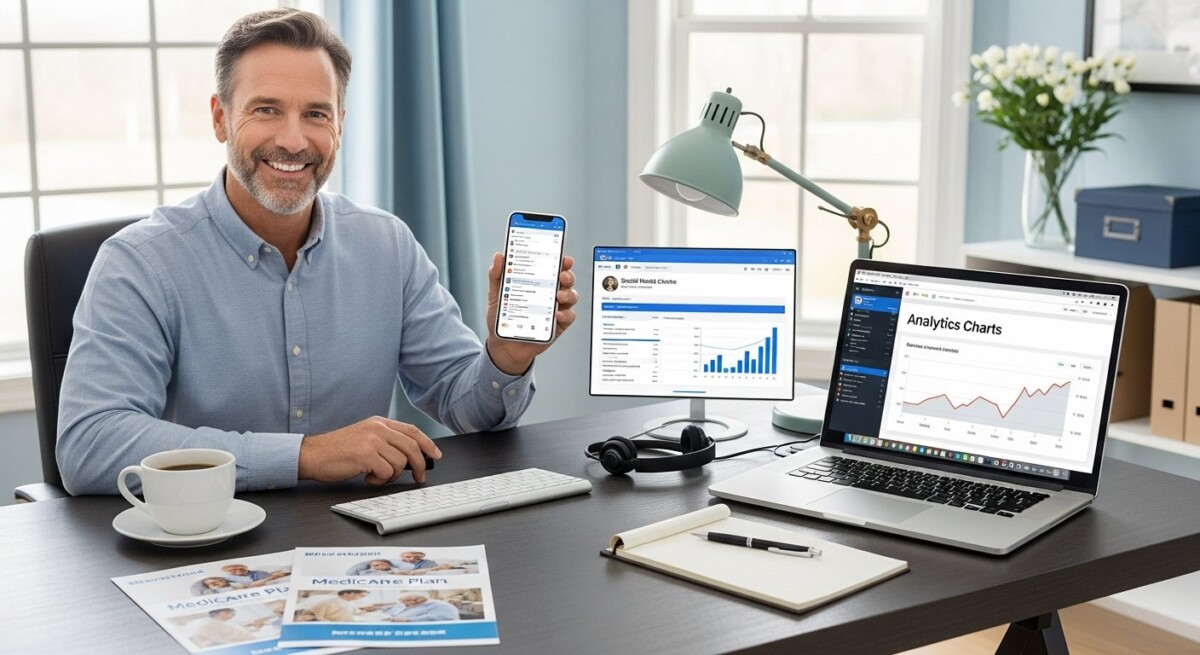
For Medicare agents, Facebook is a double-edged sword. On one hand, it offers unmatched targeting for reaching seniors and their adult children who help with plan decisions. On the other, the platform’s strict advertising policies and the complexity of Medicare compliance can feel like a minefield. Yet those who master this channel consistently fill their pipelines with high-intent prospects. The key is understanding that Medicare Facebook leads are not just about clicks; they are about building a system that captures, qualifies, and converts within a tightly regulated environment. This guide will walk you through a proven framework to turn your Facebook ad spend into a predictable source of new clients, while staying fully compliant with CMS rules.
What sets successful agents apart is not a secret hack, but a disciplined approach to offer creation, landing page design, and rapid follow-up. You need to attract the right person, capture their information legally, and contact them before a competitor does. In our experience, agents who treat Facebook as a lead source rather than a branding tool see the best return. They focus on immediate value exchange: a clear educational resource or a direct consultation request. The following sections break down each step of that process, from campaign setup to lead nurturing, with practical tips you can implement today.
Why Facebook Is a Goldmine for Medicare Leads
Facebook remains the most powerful advertising platform for reaching the Medicare demographic. With over 2.9 billion monthly active users, it is not just a social network; it is a primary source of news, connection, and information for many Americans over 65. Unlike search ads that capture demand when someone is already looking, Facebook allows you to create demand by targeting users based on interests, behaviors, and life events. For example, you can target users who have recently shown interest in retirement planning, AARP content, or Medicare supplement insurance. This proactive approach is especially valuable during Annual Enrollment Period (AEP) and Medicare Advantage Open Enrollment, when seniors are actively comparing options.
Moreover, Facebook’s detailed targeting lets you refine your audience by age, location, and even household income. You can also create lookalike audiences from your existing customer list to find more people who resemble your best clients. However, the real power lies in the platform’s ability to capture leads natively through instant forms. When a user clicks your ad, a form pre-filled with their Facebook data appears, making it frictionless for them to submit. This convenience dramatically increases conversion rates compared to sending traffic to a separate landing page. But convenience cuts both ways: you must be prepared to call these leads immediately. The average response time in the insurance industry is over 24 hours, but the first agent to call often wins the sale. Speed is your greatest competitive advantage.
To maximize your results, you need to align your Facebook strategy with your broader lead generation efforts. For instance, if you also purchase leads from a marketplace like MedicareLeads.com, you can use Facebook to supplement your pipeline with exclusive leads that you do not have to share. This combination gives you more control over your follow-up and allows you to test different messages. In our guide on how to generate Medicare leads in Lexington KY, we explain how local targeting on Facebook can be combined with other channels for maximum impact. The same principles apply nationally, but the key is to start with a clear picture of your ideal client and then let Facebook’s algorithms find them.
Setting Up Compliant Facebook Ad Campaigns
The first step is to understand Facebook’s advertising policies for healthcare products. You cannot use before-and-after images, make exaggerated claims about savings, or imply that you are affiliated with Medicare or the government. Your ads must be transparent about who you are and what you offer. You also need to include a clear privacy policy link on your landing page. Facebook has a specific process for health insurance advertisers, and you may need to get your business manager account approved. Plan for this ahead of time, as it can take a few days. The approval process is not optional; it protects both you and the platform from legal issues.
When creating your campaign, focus on a single offer. For example, you could promote a free Medicare Advantage plan comparison guide or a 15-minute consultation to review the client’s current coverage. The offer must be specific and valuable enough to encourage a click. In your ad copy, use clear, non-technical language. Avoid jargon like “Medigap” or “Part D” unless you explain it. Instead, use phrases like “fill gaps in your coverage” or “find a plan that fits your budget.” Your primary text should be concise, and your creative should be a high-quality image or short video that features a real person, ideally a senior or a friendly agent. The call-to-action button should say “Learn More” or “Sign Up,” not “Buy Now.”
Also, you must be careful with your landing page. It should be a dedicated page that matches the ad’s message and includes a form to capture the lead’s name, phone number, zip code, and perhaps their current plan. The page must have a clear privacy policy and a disclaimer that you are not connected with the federal Medicare program. If you use a third-party lead generation service, they will often provide a compliant landing page for you. At MedicareLeads.com, for example, we ensure that all landing pages and lead forms meet CMS guidelines, so you can focus on the follow-up. If you are building your own, you can also use our custom website development service to create a professional, converting page that is fully compliant.
Lead Capture and Qualification Strategies
Once your ads are live, the next challenge is capturing quality information. Facebook’s instant forms are excellent for mobile users, but they often provide minimal data. You may only get a name, email, and phone number. To qualify the lead further, you can add a few qualifying questions to the form, such as “Are you currently enrolled in Medicare?” or “Are you turning 65 within the next 3 months?”. These questions help you prioritize who to call first. However, keep the form short. Each additional field increases the chance that a user will abandon it. A good balance is three to five questions, including one about the desired plan type (Advantage, Supplement, or Part D).
To improve your lead quality, use Facebook’s lead targeting options. You can target people who have indicated that they are “likely to move” or “recently retired”. You can also use the “Interests” targeting to reach users who follow pages like AARP or Medicare.gov. But the most effective strategy is to create a custom audience from your existing client list and then build a lookalike audience. This approach finds people who share characteristics with your best clients, which often leads to higher conversion rates. Additionally, you can run separate campaigns for different market segments, such as those turning 65 (initial enrollment) versus those already 65+ (AEP). The messaging should differ: the former needs to understand the basics, while the latter may be looking for lower costs or better coverage.
Another critical aspect is lead validation. Not all Facebook leads are high quality. Some users may click out of curiosity, not genuine intent. To avoid wasting time, you should implement a validation process. This could be an automated system that checks the lead’s phone number against a national do-not-call list or verifies their zip code. Some lead generation platforms, like MedicareLeads.com, offer real-time validation and even live transfers, which connect you directly with a senior who has requested a phone call. For your Facebook leads, you can use a similar approach: after the form submission, send an automated email or text message asking the user to confirm their interest. This simple step can filter out many low-intent leads before you ever pick up the phone.
Nurturing and Converting Facebook Leads
The lead is only as valuable as your follow-up process. The golden rule is to call within 5 minutes of the lead submitting the form. The odds of connecting with a lead drop by 10 times after the first hour. If you cannot call immediately, use an automated SMS to let them know you have received their request and will call shortly. This sets expectations and reduces the likelihood that they will ignore your call. When you do connect, be prepared with a script that addresses their specific situation. Ask open-ended questions to understand their current coverage, health needs, and budget. Do not pitch a plan right away; build rapport and trust. Remember that seniors are often wary of insurance agents, so your tone should be educational, not salesy.
If the lead does not answer, leave a voicemail and send a follow-up text. Then, call again at different times of the day. Persistence is key, but be mindful of the Telephone Consumer Protection Act (TCPA). You must have written consent to call or text leads. Facebook’s instant form should include a clear consent statement, and you should also have a verbal consent recorded if you call. For a deeper dive into local lead generation strategies that include these follow-up steps, see our guide on how to generate Medicare leads in Kansas City MO. The same principles apply to any market, but local nuances matter.
For leads who are not ready to buy immediately, place them into a nurturing email sequence. Send them a series of educational emails over the next few weeks, covering topics like the difference between Medicare Advantage and Medigap, how to avoid late enrollment penalties, and what changes are happening in the upcoming year. This keeps you top of mind. Also, consider using Facebook Custom Audiences to retarget these nurtured leads with ads that show testimonials or answer common questions. This multi-touch approach can increase conversion rates significantly. In fact, a study by InsideSales.com found that 80% of sales require at least 5 follow-up calls, but 44% of agents give up after the first call. Do not be one of them.
Measuring Performance and Scaling
To know if your Facebook lead generation is working, you must track key metrics. The most important is cost per lead (CPL). But do not just look at the CPL; also consider the cost per qualified lead and the cost per enrolled client. A lead that costs $20 but converts at 10% is better than a $5 lead that converts at 1%. Set up conversion tracking on your website to measure which ad sets are producing actual enrollments. Facebook’s Pixel and Conversions API can help you track these events, but you may need to work with a developer to set it up correctly. Once you have data, you can allocate more budget to the highest-performing ad sets and pause underperformers.
Another metric to watch is the lead-to-contact ratio. This tells you how many leads you are actually reaching and qualifying. If this ratio is low, your leads may be low quality, or your follow-up may be too slow. Use Facebook’s lead ads to automatically send a thank-you message with a link to your calendar, allowing the lead to book a time for a call. This reduces the need for phone tag. You can also use a CRM to manage your leads and automate follow-up tasks. A good CRM will help you track every interaction and set reminders for future calls. This is especially important during AEP when you may be juggling dozens of leads daily.
Finally, consider scaling your efforts by increasing your daily budget gradually. Facebook’s algorithm needs time to optimize, so do not double your budget overnight. Instead, increase it by 20% every few days and monitor the results. Also, experiment with different ad creatives and copy. Run A/B tests on your headlines, images, and call-to-action buttons. Over time, you will find a winning combination. For agents who want a more hands-off approach, partnering with a lead generation company that provides exclusive leads can be a smart complement. For example, how to generate Medicare leads in Lincoln NE shows how local agents can combine their own Facebook efforts with purchased leads to maintain a steady pipeline. The goal is to create a system that works for your specific market and business model.
Frequently Asked Questions
Are Facebook leads for Medicare compliant with CMS rules?
Yes, but you must follow strict guidelines. Your ads must not make misleading claims, must include a disclaimer that you are not affiliated with the government, and must have a privacy policy. You also need to obtain consent before contacting leads. Using a compliant landing page and lead form is essential.
What is the best offer for a Medicare Facebook ad?
The most effective offers are educational resources or free consultations. For example, a guide to “Understanding Medicare Advantage” or a “15-minute plan review” works well. Avoid offering cash or gifts in exchange for leads, as this violates Facebook’s policies and can attract low-quality responses.
How much does it cost to generate a Medicare lead on Facebook?
Costs vary widely depending on your targeting and competition. On average, Medicare leads from Facebook can cost between $15 and $40. However, the cost per enrolled client is what matters most. A higher CPL can be profitable if the conversion rate is high.
Should I use Facebook lead ads or send traffic to a landing page?
Facebook lead ads are generally better for mobile users because they are faster and have higher completion rates. However, a dedicated landing page allows for more content and better tracking. We recommend testing both to see which works best for your audience.
Final Thoughts
Facebook is a powerful channel for generating Medicare leads, but it requires a strategic, compliant approach. By focusing on clear offers, targeted ads, and a rapid follow-up system, you can turn your ad spend into a steady stream of new clients. Remember that the platform rewards quality and relevance, so continuously refine your audience and creative. If you are looking to supplement your Facebook efforts with additional exclusive leads, consider exploring the options at MedicareLeads.com, where you can purchase validated leads that are ready to talk. The combination of your own marketing and a reliable lead source can help you grow your insurance business to new heights. Start today, and do not let another AEP pass you by.